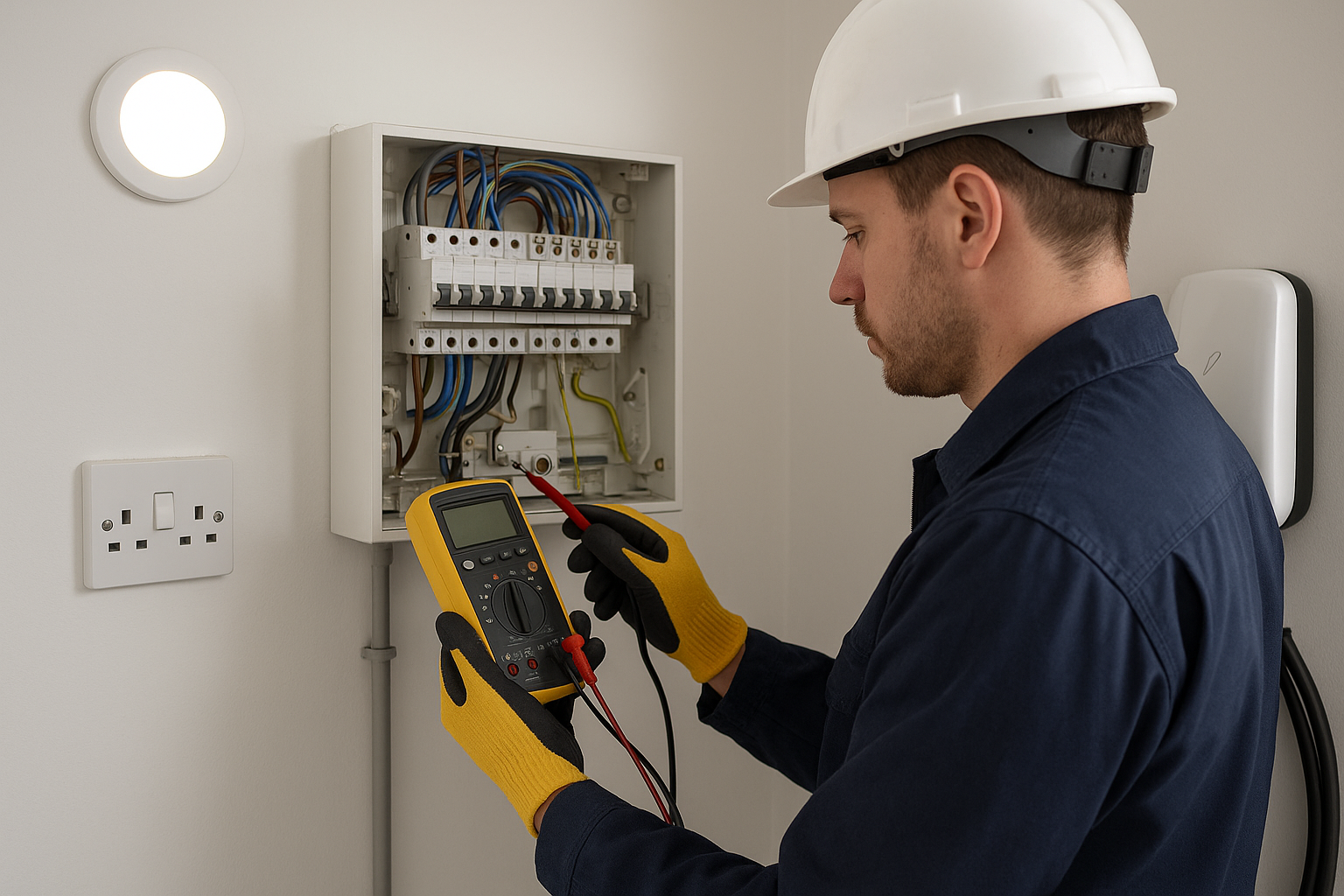
If you are looking for rewiring Greenwich, Currenx Electrical Repairs provides practical domestic and commercial wiring support across Greenwich and nearby areas including Blackheath, Deptford, Charlton, Woolwich and Maze Hill. Rewiring is often needed when old cabling, damaged accessories or repeated electrical faults start affecting safety, reliability or day-to-day use of a property.
We work with homeowners, landlords, property managers and builders on homes, flats, shops and offices near Greenwich Park, Cutty Sark, Greenwich Market, the Royal Observatory and Greenwich Station. In this part of London, many properties are a mix of older Victorian terraces, converted flats, post-war homes and more modern apartments, so wiring age and condition can vary a lot from one building to the next. If your property has old rubber or fabric cabling, no earthing, frequent faults, or it has failed an inspection, a rewiring visit is often the right place to start.
Our approach is to assess the existing installation, explain what is happening in plain language and set out realistic options. That may mean a full rewire, a partial rewire, a room-by-room update, or first fix and second fix wiring as part of a renovation. Some electrical work is notifiable under Part P of the Building Regulations, so it is important to use a competent electrician and make sure the job is properly tested and certified where required.
Call 020 3633 8274 or email info@greenwich-electricians.co.uk to request a visit from Currenx Electrical Repairs.
Recent local work has included a fuse box advice visit in Maze Hill where circuits were tripping and consumer unit repair or upgrade options were explained clearly, a consumer unit fault check in Blackheath where a tripping circuit was isolated and assessed, and a socket replacement visit in Deptford where damaged socket fronts were replaced and the circuit was tested so the outlets could be used safely again. That kind of practical, problem-led work is often what leads into a wider rewiring discussion.
Full House Rewiring in Greenwich
A full house rewire is usually considered when the existing wiring is no longer suitable for the property’s needs or when the installation shows signs of age, damage or poor condition. In Greenwich, that often applies to older homes with outdated cabling, properties that have been altered over time, or houses where repeated faults suggest the wiring is no longer reliable.
Common signs include frequent tripping, sockets that feel loose or damaged, lights that flicker, discoloured accessories, old fuse boxes, mixed wiring types and the absence of an effective earth. In some homes, the issue is not one single fault but a combination of ageing circuits and past alterations that no longer match modern loads such as kettles, washing machines, home offices and charging equipment.
For a full house rewiring project, the main aim is to replace the unsafe or inadequate wiring layout with a more dependable installation that suits current use. That can include new circuits, updated sockets and lighting points, a consumer unit review, and testing once the work is complete. Where the property is occupied, planning matters as much as the wiring itself, so we discuss access, room sequencing and how to keep disruption manageable.
For landlords and property managers, a full rewire may also be the sensible answer when an inspection has highlighted serious issues or when repeated repairs are no longer cost-effective. If you are unsure whether the property needs a full rewire, a site visit and inspection can help establish whether the problem is isolated or more widespread.
Partial and Room Rewiring in Greenwich
Not every property needs a complete rewire. In many Greenwich homes, the issue is limited to one area, one floor or a handful of circuits. That is where partial and room rewiring can be the right solution. This is often suitable when a kitchen, loft conversion, extension, bedroom, hallway or living room needs modern wiring but the rest of the property is still serviceable.
Partial rewiring is commonly requested where there has been damage to a circuit, repeated faults in one area, or a room has been refurbished and the wiring no longer matches the new layout. It is also useful where older accessories or cabling need to be replaced before new lighting, sockets or appliances are installed.
In practical terms, this type of work can help with:
- isolating and replacing a problem circuit
- upgrading wiring in a single room or floor
- adding sockets or lighting during a reconfiguration
- bringing a refurbished area in line with the rest of the home
- supporting a staged upgrade where a full rewire is not yet necessary
For many homeowners and landlords, partial rewiring is a useful way to deal with the most urgent issues without taking on a full property-wide project immediately. It is still important to inspect the existing installation carefully, because old wiring in one area can sometimes be a sign of broader wear elsewhere.
Period Property Rewiring in Greenwich
Period property rewiring in Greenwich often needs extra care because older buildings can contain a mix of original features, later alterations and wiring installed at different times. Victorian terraces, converted flats and older homes near the town centre may have hidden routes, limited access points or previous repairs that make the installation more complex than a straightforward modern rewire.
Older wiring can include fabric or rubber cabling, dated accessories, or circuits that have been patched and altered over the years. In some period properties, there may also be no proper earthing, which becomes a concern when modern appliances, metal light fittings or updated kitchen equipment are being used. That does not automatically mean every old property needs a full rewire, but it does mean the wiring should be assessed properly.
When working on period homes, the practical balance is often between safety, appearance and disruption. Homeowners usually want the electrical system updated without unnecessary damage to original features. The right approach depends on the property’s condition, the existing wiring route, the rooms involved and how the building is used day to day.
Currenx Electrical Repairs can advise on whether a full house rewire, a partial update or a phased approach is more suitable. If you are buying, renovating or managing a period property in Greenwich, an early inspection can help you plan the electrical work around the rest of the project rather than reacting to faults later.
Rewiring During Renovation in Greenwich
Rewiring during renovation in Greenwich is often the most efficient time to carry out electrical upgrades, because floors, walls or ceilings may already be open for other building work. This applies to kitchen refits, loft conversions, extensions, bathroom upgrades and larger refurbishments in houses, flats and commercial premises.
When wiring is done as part of a renovation, the electrical layout can be planned around the new use of the space. That may include more sockets, better lighting positions, appliance circuits, smoke alarm wiring, extractor fan connections or updated power for offices and work areas. It also gives builders and electricians a chance to coordinate the first fix and second fix stages properly.
Rewiring at the renovation stage can save time later because access is already available. It can also reduce the risk of having to reopen finished surfaces to correct wiring that was left unchanged. For property managers and landlords, this is especially useful when a refurbishment is being used to bring a unit back into safe, practical condition before re-letting.
If you are planning building work near Greenwich Station, around the market area or in nearby neighbourhoods such as Charlton, Deptford or Blackheath, it is worth speaking to an electrician early. That helps make sure the electrical design matches the project rather than being added as an afterthought.
First Fix and Second Fix Wiring in Greenwich
First fix and second fix wiring are the two main stages of many rewire and renovation projects. During the first fix stage, the concealed wiring routes, back boxes and cable runs are installed before plastering or finishing work. During the second fix stage, the visible accessories such as sockets, switches, lighting fittings and final connections are completed once the building work has progressed.
This staged approach is often used in Greenwich renovations because it allows the electrical work to follow the build sequence. It is especially useful for extensions, converted flats, kitchen projects and larger refurbishments where several trades need to work in the same space.
Good first fix planning matters because it affects how the finished installation performs and how easy it is to live with. That includes socket positions, lighting control, appliance locations and how the circuits are divided. The second fix stage is where the installation starts to look complete, but it still needs proper testing to confirm that everything is safe and working as intended.
Where a property is being rewired in stages, clear communication with the builder or homeowner is important. That helps avoid delays and makes sure the electrical work fits the practical use of the property. If you need rewiring support for a project in Greenwich or a nearby area, Currenx Electrical Repairs can discuss the likely sequence and the level of access required.
Inspection, testing and repair options
Before any rewiring recommendation is made, the existing installation should be checked properly. That may involve looking at the consumer unit, identifying the wiring type, checking for signs of damage or overheating, confirming earthing arrangements and testing the circuits that are causing concern. If a circuit is tripping, it is important not to keep resetting it repeatedly without finding out why.
Depending on the findings, the next step may be a repair, a circuit replacement, a partial rewire or a full rewire. In some cases, a consumer unit issue may be part of the problem. In others, the wiring itself may be the main concern. The right answer depends on the condition of the installation, the age of the property and how the electrical system is being used.
For safety, switch off at the consumer unit if you notice burning smells, visible damage, sparking or repeated tripping, keep clear of affected wiring and arrange an electrician to inspect it. Do not attempt DIY rewiring. Electrical faults can develop quickly and should be assessed by a professional.
Why Greenwich customers call Currenx Electrical Repairs
Currenx Electrical Repairs focuses on local electrical work across Greenwich and surrounding neighbourhoods, with support for domestic and commercial customers who need clear advice and practical solutions. The business details supplied for this page are listed on the Google Business Profile, and recent local jobs show the type of work handled in the area: consumer unit fault checks, socket replacements and advice visits for tripping circuits.
That local experience matters because the properties around Greenwich are varied. A flat near Cutty Sark may need a different approach from a Victorian terrace near Blackheath or a commercial unit closer to Woolwich. The aim is to match the wiring solution to the building, the fault and the way the space is used.
Alongside rewiring, Currenx Electrical Repairs also helps with electrician callouts, emergency electrician support, electrical repairs, consumer unit work, lighting installation, socket installation, electrical fault finding and domestic electrical work. If you need help deciding whether your problem is a wiring issue, a consumer unit issue or a localised fault, a visit can provide clarity.
Call 020 3633 8274 to discuss rewiring in Greenwich, or email info@greenwich-electricians.co.uk to arrange a visit.
Service area coverage includes Greenwich, Blackheath, Deptford, Charlton, Woolwich and Maze Hill, with work arranged from the address at 1 Prince of Orange Ln, London SE10 8JQ, United Kingdom.